
In the past, when we talked about “longevity,” we usually meant simply living longer. But the medical community is now paying increasing attention to another meaning: healthspan—how many years a person can live in good health, without serious disease or significant functional impairment, rather than merely living longer.
Suppose someone lives to 90, but from age 70 onward is affected by diabetes, cardiovascular disease, muscle decline, cognitive decline, and mobility limitations. Compared with someone who remains in relatively good physical condition into their 80s, their quality of life will be very different.
Longevity medicine has gradually developed in this context. It combines preventive medicine, geriatric medicine, cardiovascular medicine, endocrinology, nutrition, sports medicine, genetics, and other fields, and uses physical examinations, disease risk assessment, and long-term health management to delay the onset of disease and decline in physical function as much as possible.
We are not yet able to stop human aging, nor can we provide treatment that suddenly adds decades of life to healthy people. But longevity medicine can identify health risks early, control chronic diseases, and improve physical function, thereby extending healthspan.
1. Longevity Medicine and Anti-Aging Services
In recent years, many large hospitals in China have begun establishing anti-aging clinics or multidisciplinary health and longevity clinics. In addition, many specialized longevity clinics have also emerged.
For example, Xiangya Hospital of Central South University has opened a multidisciplinary anti-aging diagnosis and treatment clinic, with participation from cardiovascular medicine, endocrinology, dermatology, gynecology, geriatric medicine, traditional Chinese medicine, health management centers, and other specialties.
As another example, many hospitals in Hainan, such as Boao Yiling Life Care Center and Boao Shulan Hospital, have established longevity clinics and, leveraging Hainan’s special medical policies, offer a range of cutting-edge medical technologies from genetic testing to stem cell therapy.
Some hospitals also place modern health checkups and traditional Chinese medicine wellness care within the same service system, providing patients with assessments related to vascular health, metabolism, bones and muscles, sleep, and other aging-related conditions.
2. Comprehensive Health Checkups and Disease Risk Assessment
Longevity medicine generally begins with a complete physical assessment, including health examinations and disease evaluation.
A person who appears outwardly very healthy may actually already have high blood pressure, abnormal blood lipids, insulin resistance, fatty liver, atherosclerosis, reduced bone mass, or muscle loss, but these signs may not yet be clearly apparent.
Longevity clinics arrange different tests based on the client’s age, sex, family history, and personal health status. For example, they may test and assess the following:
- Blood pressure, blood lipids, and blood glucose
- Liver function, kidney function, and lung function
- Insulin and other metabolic markers
- Inflammation-related markers and hormone levels
- Blood vessels, electrocardiogram, and cardiac function
- CT, MRI, and ultrasound
- Bone density, body composition, and muscle mass analysis
- Various tumor markers and cancer screening
- Cognitive function, sleep status, and more
After completing the examinations, doctors combine the test results with personal risk factors to determine which health problems are more likely to arise in the future. For example, a 40-year-old who does not currently have diabetes but already has abdominal obesity, fatty liver, abnormal blood lipids, and insulin resistance will have a higher future risk of developing type 2 diabetes and cardiovascular disease.

3. Biological Age and Aging Marker Testing
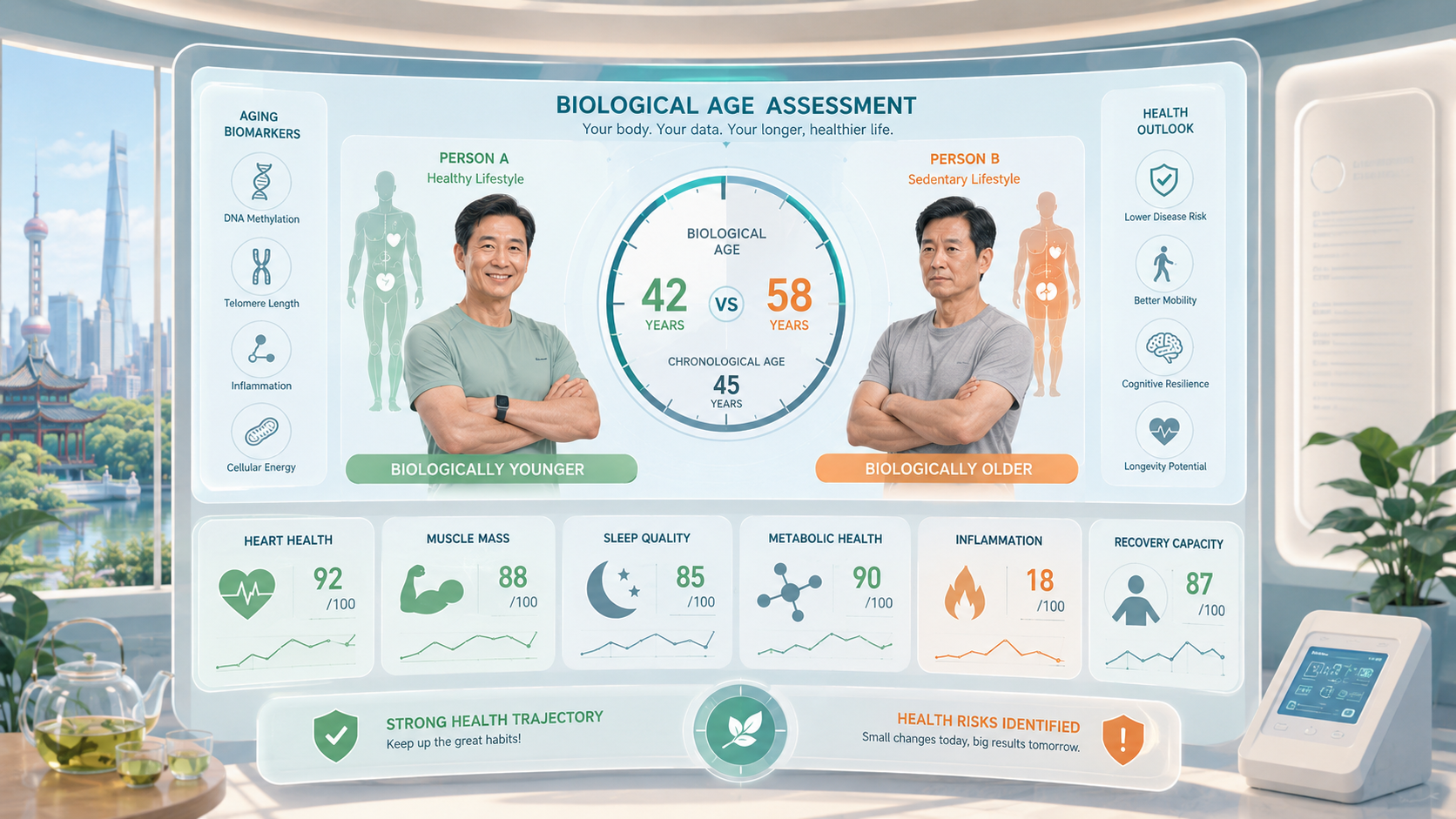
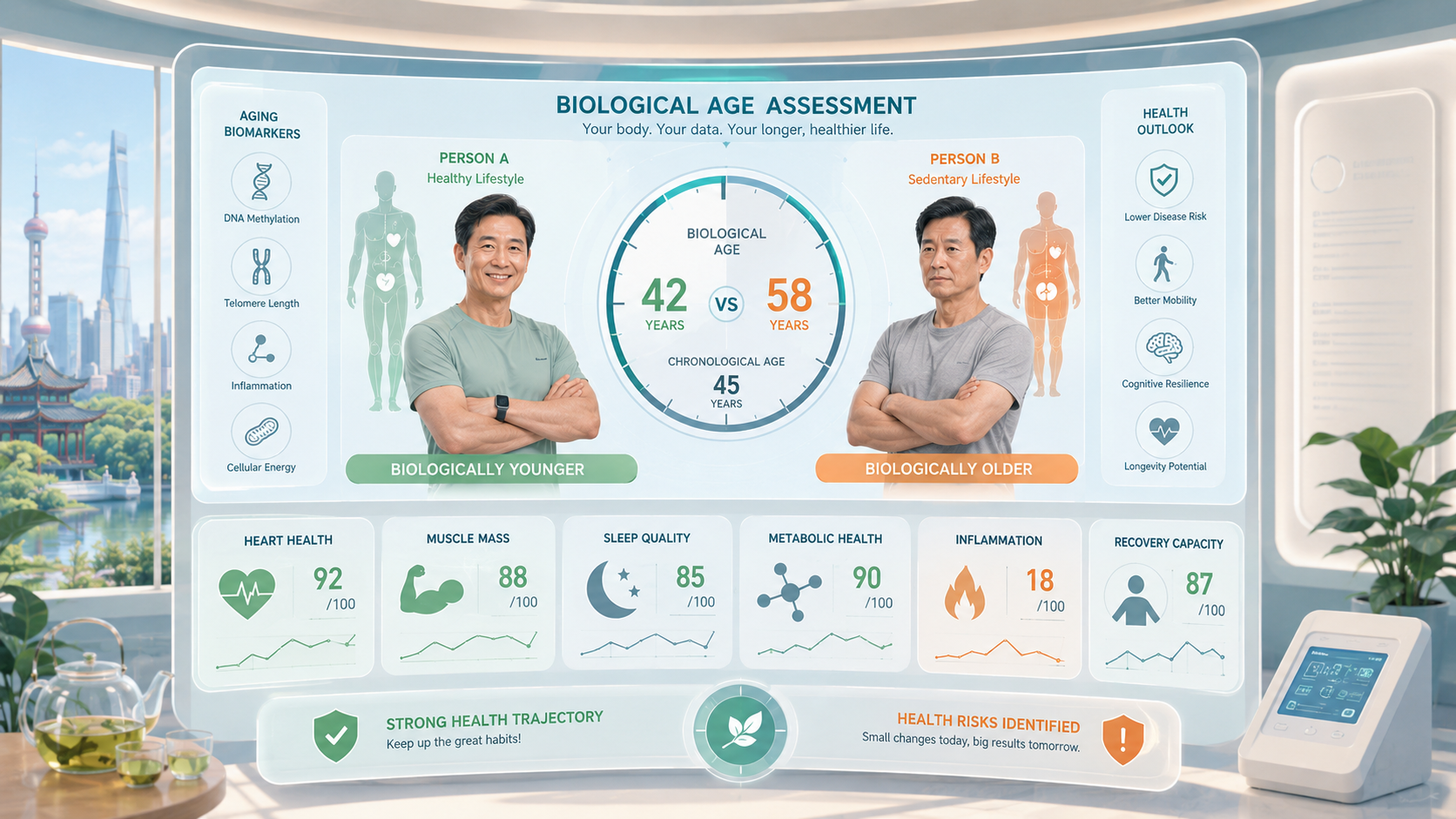
Biological age is a concept that has received considerable attention in longevity medicine in recent years. It is not the same as chronological age shown on identification documents.
For example, two people who are both 50 years old may have completely different physical conditions. One may exercise regularly, have no chronic diseases, and have good cardiopulmonary function, while the other may already have obesity, high blood pressure, diabetes, and fatty liver.
For this reason, medical researchers have begun using various biological indicators in the human body to estimate the degree of aging.
For example, the “aging clocks” currently under study include DNA methylation clocks, proteomic clocks, metabolomic clocks, and age models built from multiple blood and physical function indicators.
However, biological age has not yet formed a unified clinical standard like blood pressure or blood glucose. Using different testing methods, the same person may receive different biological age results.
4. Cardiovascular and Metabolic Health Management
Cardiovascular disease, diabetes, and other metabolic diseases are common chronic conditions that can significantly affect a person’s long-term health, so these are also areas of focus in longevity medicine.
Many diseases have a long development process. For example, atherosclerosis may begin decades before a myocardial infarction occurs, and insulin resistance may exist for many years before developing into type 2 diabetes.
In longevity medicine, doctors can assess risk through blood pressure, blood lipids, blood glucose, body fat, waist circumference, liver fat, cardiopulmonary capacity, and other indicators, and then provide management of weight, diet, exercise, blood lipids, and blood glucose based on lifestyle habits, dietary habits, and other specific circumstances.
For example, if a 40-year-old already has fatty liver, abdominal obesity, and insulin resistance, improving weight, diet, and exercise habits at this stage can greatly reduce the future risk of developing diabetes and cardiovascular disease.
5. Cancer Risk Assessment and Screening
Cancer screening also frequently appears in longevity medicine services. Doctors determine which cancer screenings are needed based on age, sex, smoking history, family history, and other risk factors. Common cancer screening tests include:
- Low-dose lung CT
- Breast cancer screening
- Cervical cancer screening
- Colorectal cancer screening
- Gastroscopy and colonoscopy
- Prostate-related examinations
- Genetic testing for specific cancers
Cancer screening and assessment are highly individualized, and different people need different screening items. For example, a 30-year-old with no smoking history and a 65-year-old male long-term smoker need to focus on completely different diseases.
6. Muscle, Bone, and Physical Function Assessment
Longevity medicine also focuses on whether a person can continue to live independently in the future, which is closely related to our quality of life.
As we enter middle and old age, muscle mass, muscle strength, bone density, balance, and cardiopulmonary capacity gradually change. For example, severe sarcopenia, osteoporosis, or a decline in balance can greatly increase the risk of falls and fractures.
Longevity clinics in China have begun to systematically conduct comprehensive geriatric assessments, including physical function, nutritional status, cognitive ability, sarcopenia, frailty, swallowing function, fall risk, psychological status, and polypharmacy, among others.
For example, if a 75-year-old has normal blood pressure and blood glucose but has already experienced significant muscle loss, slower walking speed, and poorer balance, improving muscle strength and reducing fall risk become very important for their quality of life in the coming years.
7. Nutrition, Exercise, Sleep, and Weight Management
One surprising fact is that many interventions for healthspan actually come from daily life. For example:
- Personalized exercise plan
- Muscle strength training
- Cardiorespiratory fitness training
- Weight and body fat management
- Protein and nutritional intake recommendations
- Sleep management
- Smoking cessation and alcohol intake control
- Blood pressure, blood lipid, and blood glucose management, etc.
Exercise, sleep, diet, and weight management may seem ordinary, but they are supported by a large body of medical research. If a so-called longevity medicine institution mainly sells expensive health supplements but rarely evaluates blood pressure, blood lipids, exercise capacity, sleep, and body composition, then the services it provides need to be carefully scrutinized.
8. Traditional Chinese Medicine Health Management
Traditional Chinese medicine has long embraced the health management concept of “treating disease before it arises.” Some hospitals also combine TCM constitution assessment, dietary therapy, Chinese herbal medicine, and acupuncture with modern medical examinations.
For example, one of the most common TCM dietary therapies is called medicinal food (yaoshan), which means adding ingredients that have both medicinal and food properties to the daily diet, such as red dates, hawthorn, goji berries, Chinese yam, and lily bulb, among others.
9. What Longevity Medicine Services Are Available in China
If you come to China for longevity medicine and health management, you will first complete a systematic physical examination. Then, doctors will develop a personalized treatment and health management plan based on the examination results and lifestyle habits.
- Undergo blood tests, imaging examinations, cardiovascular and metabolic assessments, cancer risk assessment, musculoskeletal examination, and physical function testing.
- The results are analyzed by specialists in cardiology, endocrinology, geriatric medicine, nutrition, sports medicine, gynecology, or other relevant specialties.
- Develop a personal health management plan, such as controlling blood lipids, reducing weight, improving insulin resistance, treating sleep apnea, increasing muscle strength, or completing further cancer screening.
- Reassess every few months or once a year, and adjust the health management plan based on new examination data.
One feature of large hospitals in China is that examination equipment and specialty resources are highly concentrated. International patients can complete all examinations in as little as half a day to a full day, and can also very easily obtain diagnostic opinions from different specialists.