
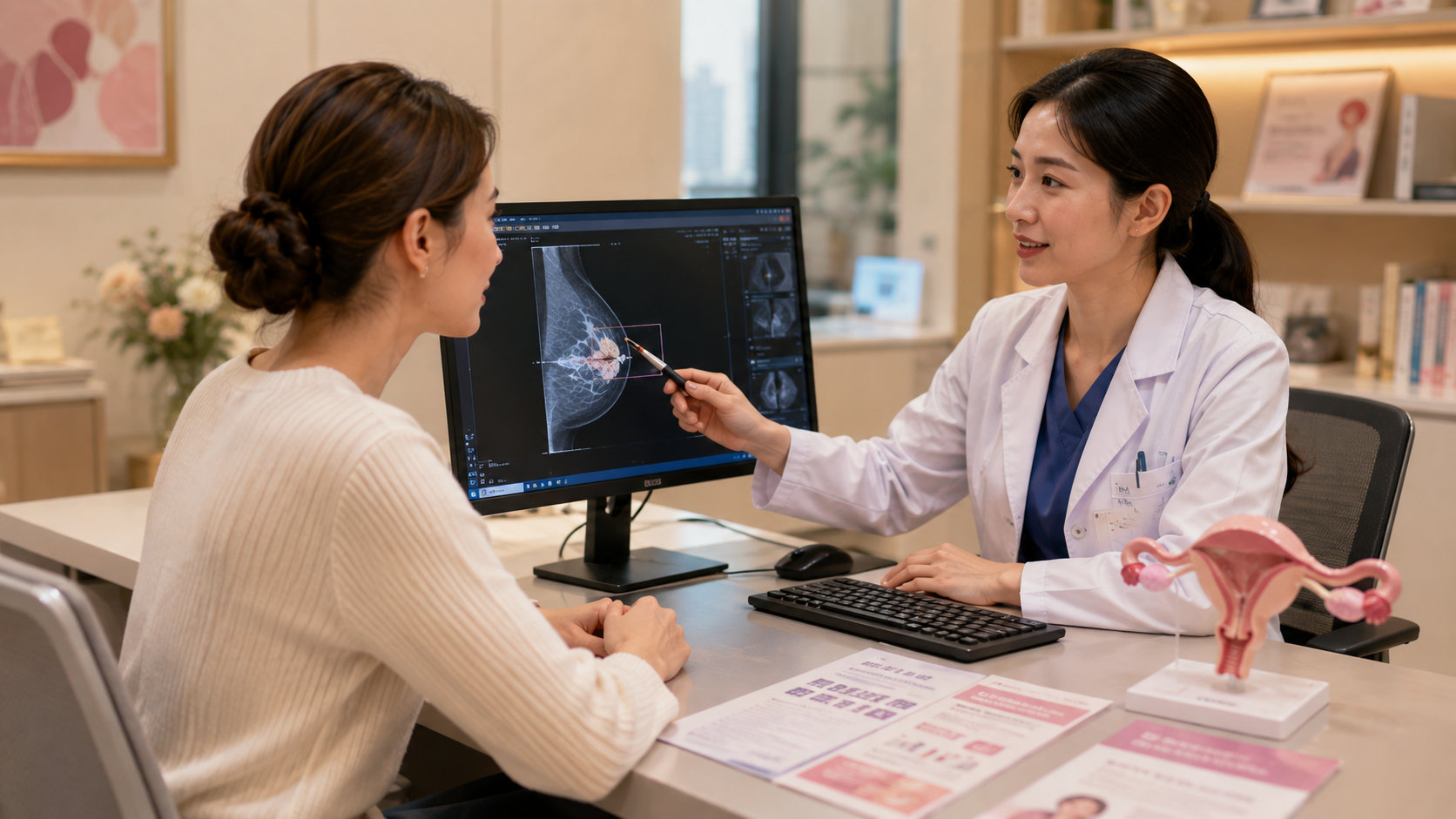
Women traveling to China for tourism, family visits, or business can conveniently arrange a comprehensive health check-up.
Large public hospitals, international medical centers, and high-end private hospitals in China can typically arrange blood tests, ultrasound, breast examination, cervical screening, gynecological examination, thyroid assessment, CT, MRI, gastrointestinal endoscopy, and other tests in a centralized manner, suitable for foreign women who wish to complete a comprehensive health assessment in a relatively short time.
Why Have a Health Check-up in China
In many countries, the health check-up process is fragmented. Breast examination, gynecological examination, imaging tests, blood tests, gastrointestinal endoscopy, and specialist appointments may need to be scheduled separately. For women who are busy with work, travel frequently, or live in areas with slow medical appointments, a complete health assessment can take a long time.
In China, many check-up items can be completed within half a day, and routine results are available quickly. If breast nodules, abnormal cervical screening, thyroid nodules, ovarian cysts, uterine fibroids, anemia, abnormal blood lipids or glucose, or abnormal tumor markers are found, you can continue with further evaluation by breast surgeons, gynecologists, endocrinologists, thyroid surgeons, gastroenterologists, or oncologists.
For women visiting China for tourism or business, this arrangement combines health screening with travel, saving time on waiting and repeated appointments.
How to Choose Breast Screening?
Breast examination is one of the most common items in women's health check-ups. Common methods include breast ultrasound, mammography (X-ray), and for some high-risk women, breast MRI.
Breast ultrasound is suitable for observing breast nodules, cysts, and breast structure, and is valuable for women with dense breasts. Mammography is an important method recommended for breast cancer screening in many countries. The U.S. Preventive Services Task Force recommends biennial mammography screening for women aged 40 to 74; the American Cancer Society recommends that women aged 40 to 44 have the option to start annual screening, women aged 45 to 54 should be screened annually, and women aged 55 and older can transition to biennial screening or continue annual screening.
If a woman has a family history of breast or ovarian cancer, known BRCA gene mutations, prior chest radiation at a young age, or multiple abnormal breast examinations, a standard check-up package may not be sufficient. She may need evaluation by a breast specialist to determine whether to add MRI, genetic risk assessment, or more intensive follow-up.
Cervical Screening: HPV and TCT
Cervical cancer screening is a valuable component of women's health check-ups. Common methods include HPV testing and cervical cytology (often called Pap test or TCT). HPV testing detects high-risk human papillomavirus infection, while cytology examines cervical cells for abnormalities.
According to the U.S. CDC, Pap tests detect precancerous changes that may develop into cervical cancer, and HPV tests detect viral infections associated with cervical cancer. The U.S. Preventive Services Task Force recommends cervical cytology every 3 years for women aged 21 to 29, and for women aged 30 to 65, options include cytology every 3 years, high-risk HPV testing every 5 years, or co-testing every 5 years.
A positive HPV or abnormal TCT does not mean cancer. Many HPV infections clear on their own, but persistent high-risk HPV infection requires careful follow-up. Doctors may recommend repeat testing, colposcopy, or cervical biopsy based on results.
What Can Gynecological Ultrasound Detect?
Gynecological ultrasound is used to examine the uterus, ovaries, and pelvic area. It can help detect uterine fibroids, endometrial thickening, ovarian cysts, pelvic masses, and other issues. It is particularly useful for women with abnormal menstruation, heavy bleeding, worsening dysmenorrhea, postmenopausal bleeding, lower abdominal pain, or a history of ovarian cysts.
Thyroid Examination
Thyroid ultrasound is very common in Chinese health check-ups, and many women discover thyroid nodules for the first time during a check-up. Most thyroid nodules are benign, but seeing the word "nodule" can cause anxiety.
Thyroid ultrasound in China can detect nodules, but not all nodules require treatment. Doctors typically assess nodule size, borders, calcification, shape, aspect ratio, lymph node status, and grading to determine whether follow-up, thyroid function blood tests, or fine-needle aspiration is needed.
If you have a neck mass, hoarseness, swallowing discomfort, or symptoms of hyperthyroidism or hypothyroidism, you should be evaluated by an endocrinologist or thyroid specialist.
Tumor Markers and Multi-Cancer Screening
Many women's check-up packages include tumor markers such as CEA, AFP, CA125, CA15-3, and CA19-9, which can serve as risk indicators or references for follow-up.
For example, elevated CA125 may be associated with ovarian cancer, but also with endometriosis, pelvic inflammatory disease, menstrual cycle, liver disease, and other conditions. CA15-3 cannot be used alone to diagnose breast cancer.
If a check-up facility offers multi-cancer early detection, genetic testing, or hereditary risk assessment, it is best to consider individual circumstances. Women with multiple relatives affected by breast, ovarian, colorectal, or pancreatic cancer, or with early-onset cancer in the family, may consider genetic counseling and testing.
Focus Areas by Age Group
For women in their 20s without specific symptoms, the focus is usually on basic check-ups, HPV vaccination status, cervical screening schedule, menstrual issues, anemia, thyroid function, skin, and lifestyle risks. Whether breast imaging, gynecological ultrasound, or other tests are needed depends on symptoms and doctor's advice.
For women in their 30s, attention can be given to cervical screening, breast ultrasound, gynecological ultrasound, thyroid assessment, preconception check-ups, anemia, vitamin D, metabolic indicators, and family history. Those with chronic stress, poor sleep, significant weight changes, or menstrual irregularities may also benefit from endocrine evaluation.
For women over 40, breast screening, cervical screening, blood glucose and lipids, liver and kidney function, cardiovascular risk, thyroid nodule assessment, gastrointestinal screening, and bone density become more important. Whether to have low-dose lung CT depends on smoking history, secondhand smoke exposure, occupational exposure, and doctor's judgment.
After age 50, in addition to breast, cervical, and gynecological issues, attention should be paid to osteoporosis, cardiovascular risk, colorectal cancer screening, postmenopausal bleeding, unexplained weight loss, and chronic disease management. The American Cancer Society's updated 2026 colorectal cancer screening guidelines continue to recommend that average-risk adults begin screening at age 45 and continue until age 75 if eligible.